How KIN works
From a real question to the research behind the answer.
KIN is designed to do the parts of research that usually require specialized training — and to show its work at every step.
- 01QuestionAsked in plain language
- 02SearchTrusted scholarly sources
- 03OrganizeDuplicates brought together
- 04PrioritizeKIN Relevance surfaces meaningful matches
- 05SynthesizeA clear answer, citations attached
The process
Eight steps, in plain language.
- 01
Ask a natural-language question
Ask the way you would ask a knowledgeable colleague. No search syntax, database knowledge, or special terminology required.
“Does attending an HBCU affect career outcomes?”
- 02
KIN interprets the research intent
KIN identifies what you are really asking — the population, topic, outcomes, and context that matter — and translates it into the language researchers use.
Population · Topic · Outcomes · Context
- 03
KIN searches trusted sources
KIN looks across scholarly databases, journals, and research repositories — not the open web.
- 04
Results are organized and deduplicated
The same study often appears in several places. KIN brings records together so each piece of research is counted once.
- 05
KIN Relevance prioritizes meaningful matches
Studies are assessed for how meaningfully they connect to Black populations and to your question — not simply whether they contain the right keywords.
- 06
Evidence is assessed and synthesized
KIN explains what the most relevant research shows, where findings agree or differ, and how strong the evidence is overall.
- 07
Citations remain visible
Every claim in an answer points back to the studies behind it. Nothing is presented without a source.
- 08
You can inspect the research yourself
Open any study to see its population, methodology, and limitations, then follow the link to the original source.
In the app
What each step looks like.
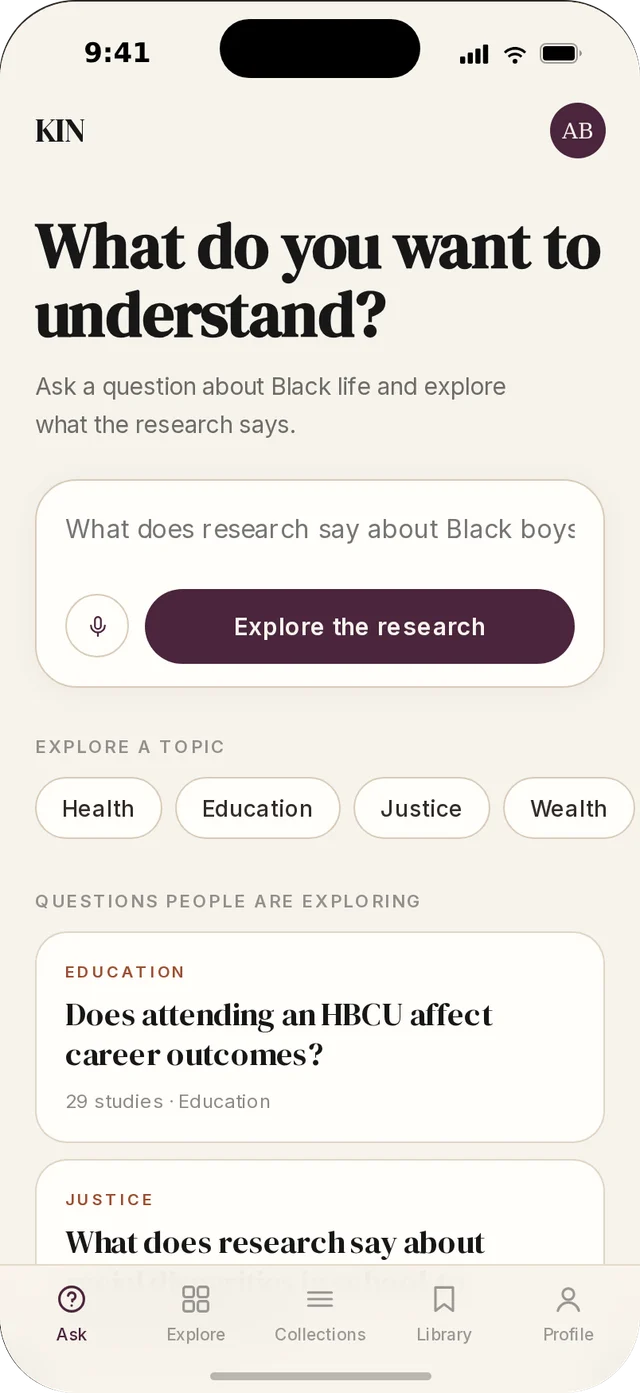
Step 01
Ask a question in plain language, or start from a topic.
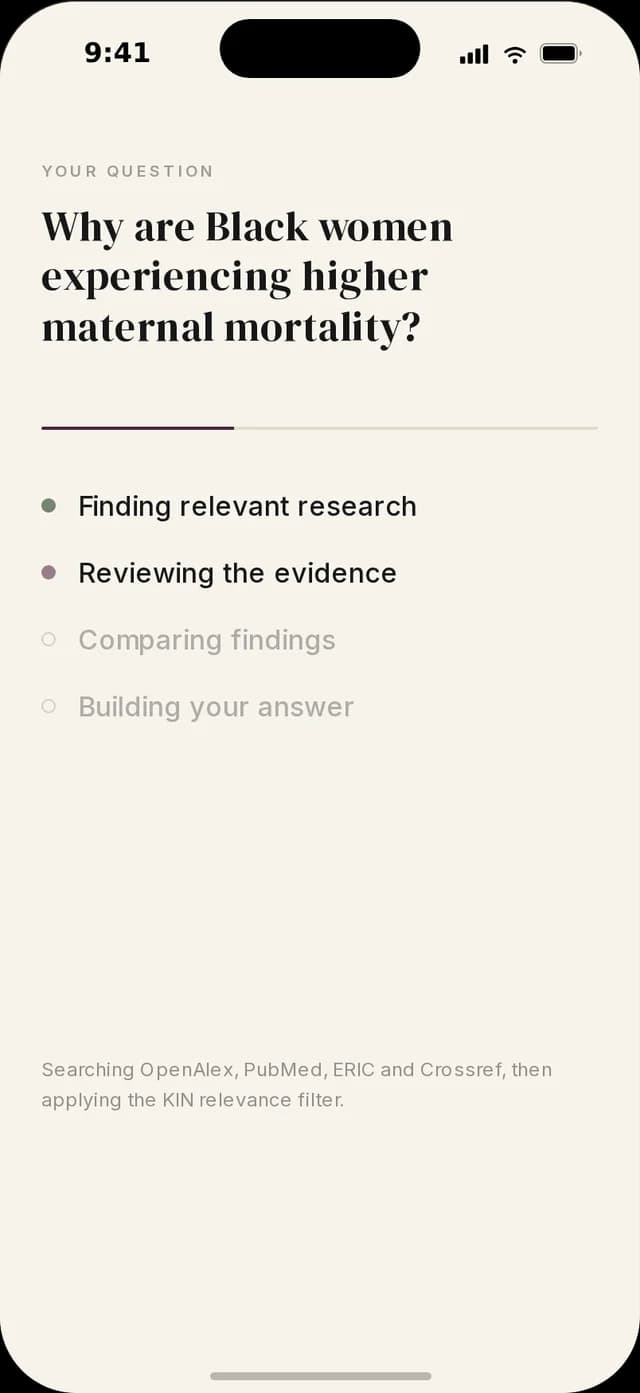
Steps 02–04
KIN reads the question, searches trusted sources, and brings duplicate records together.
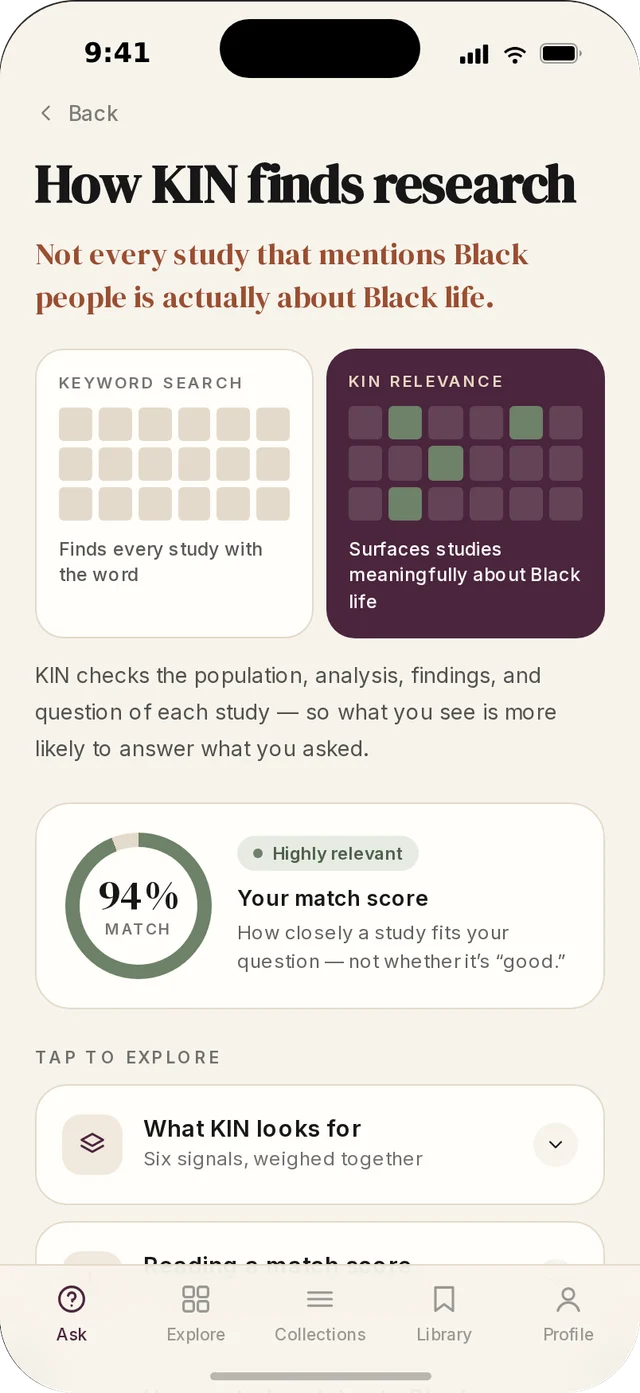
Step 05
KIN Relevance puts the studies that are truly about the question first.
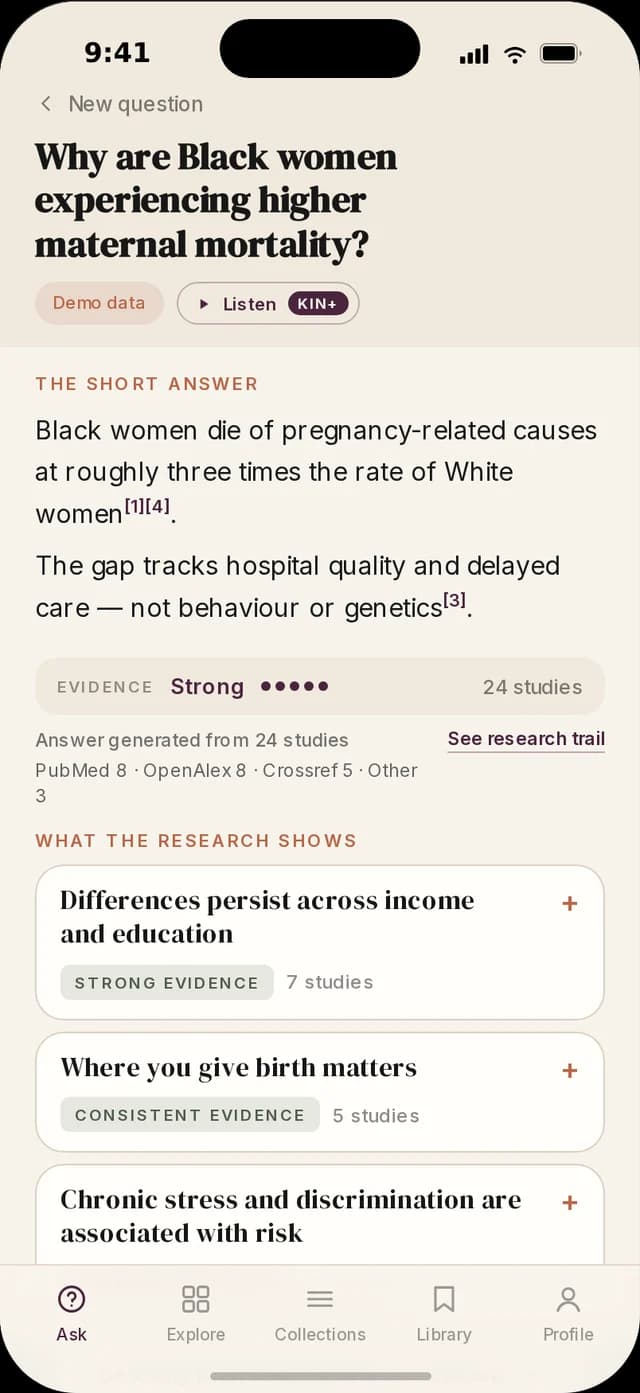
Step 06
A short answer, the key findings, and how strong the evidence is.
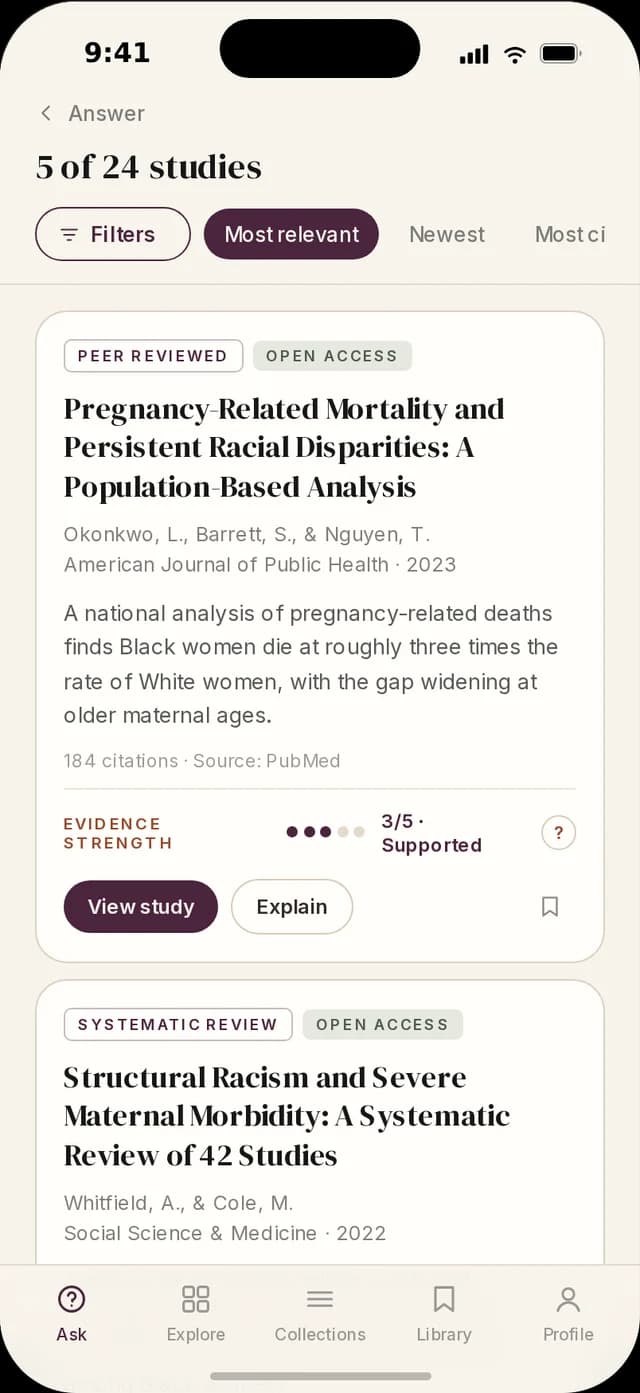
Step 07
Every study behind the answer, with its source and access clearly labeled.
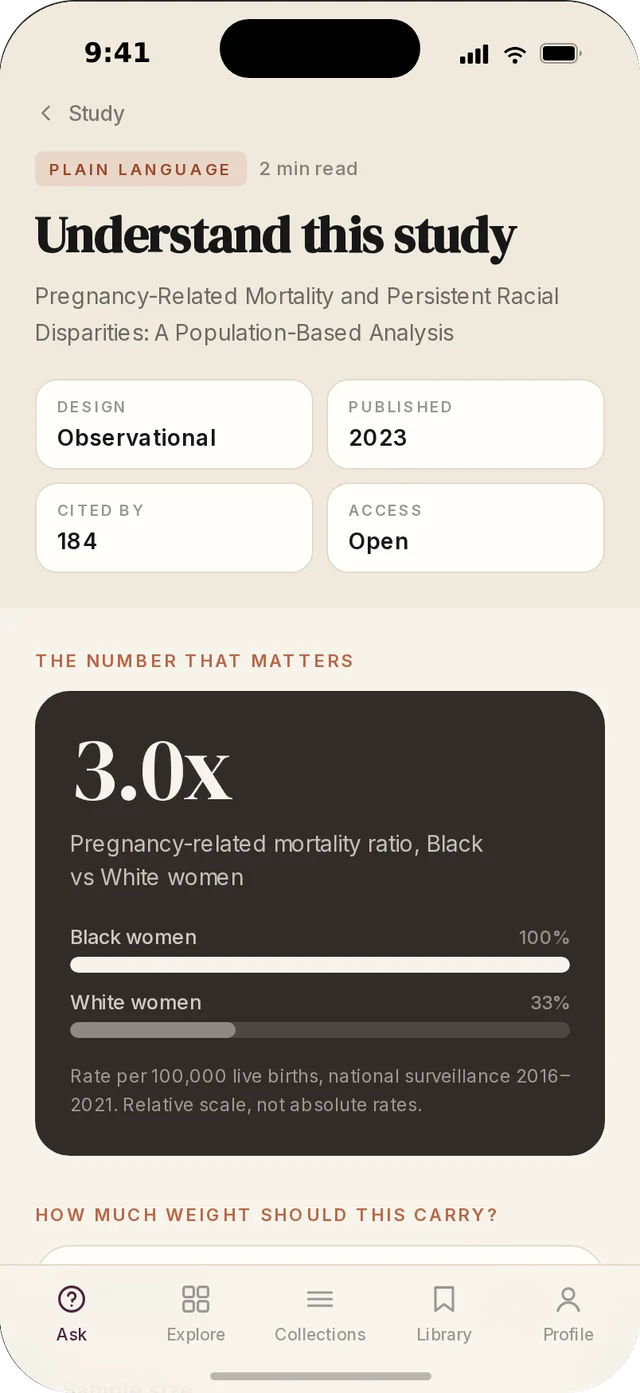
Step 08
Open any study to see its design, key numbers, and limitations.
Screens from the KIN prototype. Studies shown are demo data.
Anatomy of an answer
Start simple. Go as deep as you need.
- The short answerTwo or three plain-language sentences.01
- What the research showsKey findings, each with citations.02
- Evidence strengthStrong, mixed, emerging, or limited.03
- The studiesPopulation, methods, limitations, Match Score.04
- Original sourceFull text, publisher page, or repository.05
Our commitments
What KIN is — and is not.
KIN is
- A guide to what the research says
- Clear about uncertainty and limitations
- Built on scholarly sources you can inspect
- Written in plain, respectful language
KIN is not
- A replacement for reading the research
- Medical, legal, or financial advice
- A source of unsourced claims
- Something you are asked to trust blindly
Early access
Help shape what KIN becomes.
We are building KIN with researchers, students, educators, community leaders, and early users who believe credible research should be easier to access and understand.